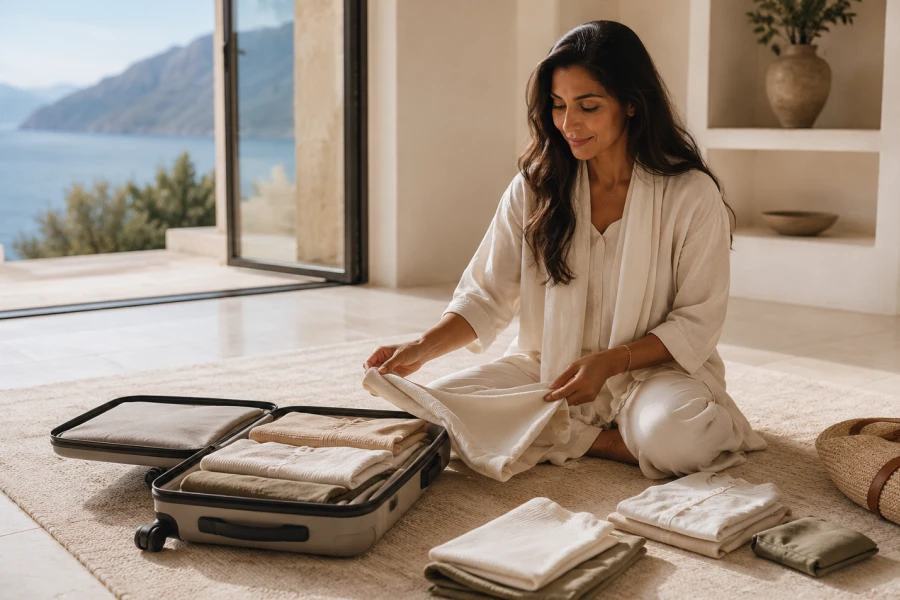
Minimalist packing with ai is not a challenge to own less or look identical each day. It is a way to remove decisions that never improve the journey. A crowded suitcase creates choices before breakfast. It makes hotels feel like temporary closets. A smaller selection can feel surprisingly generous. You know what you brought and why it works. You spend less time repacking and more time noticing your surroundings. The aim is not scarcity. The aim is a calm, dependable set of possibilities. That distinction makes a minimalist approach easier to sustain.
Repetition becomes useful when it is intentional. Choose pieces that can appear in several combinations without feeling tired. A soft overshirt can work on a plane, at breakfast, and during dinner. Neutral trousers can support a casual day or a more polished evening. The trick is not to pack only basics. It is to combine basics with one or two personal accents. A minimalist travel wardrobe gives every item a relationship to the others. That relationship makes dressing faster in unfamiliar rooms. It also prevents you from packing isolated pieces with no partner. The finished bag feels cohesive without becoming predictable.
Editing a bag also changes how you enter a new place. You can unpack in minutes rather than spreading belongings across the room. You know which pieces work together before the first morning arrives. That gives you more mental space for directions, meals, and new people. A reduced wardrobe can feel like a small daily reset. It removes choices without removing expression. You still choose how to combine familiar pieces. You simply begin with a clearer set of options. The result is less decision fatigue during a trip. That benefit becomes more noticeable with every relocation.
Maybe items are the quiet source of overpacking. They enter the bag because they might be useful under rare conditions. Most never leave their folded place. Before adding one, name the exact moment you expect to use it. Then ask whether another item already covers that moment. The method makes that comparison easier. The carry-on packing plan approach encourages choices based on likelihood, not fear. It also recognizes that many destinations sell simple replacements. Let the bag carry what matters most. Let the rest remain a possibility, not a burden.
Color can simplify a bag without making it dull. Choose two or three tones that layer easily together. Then add one color or accessory that feels distinctly yours. This makes packing visual rather than mathematical. You can see whether each new piece belongs with the rest. A coherent palette also makes getting dressed faster in dim hotel rooms. It reduces the need for extra shoes and specialty layers. The finished collection still has variety because texture and shape can change. Simplicity is not the same as sameness. It is a way to make your favorite pieces easier to wear.
Outfits work harder when you plan by combinations rather than categories. Do not count shirts, trousers, and shoes in separate columns. Picture complete looks for the activities you will actually have. Then notice which garments appear repeatedly in those scenes. Those are the pieces that deserve suitcase space. It can surface the gaps before departure. It may show that one jacket supports nearly every outfit. It may reveal that a second pair of similar sandals changes nothing. The lighter luggage routine is built from these small, honest discoveries. Every removed duplicate makes the remaining collection stronger.
Comfort is what makes a reduced bag feel luxurious. Choose fabrics you like wearing for long hours. Bring shoes that have already survived a full day outside. Include one outfit that makes you feel immediately like yourself. A minimalist system should never erase personality. It should remove options that create friction. That difference matters during delays, warm afternoons, and rushed mornings. The best pieces are not merely photogenic. They help you move, rest, and adapt without thinking too hard. A useful bag supports the body before it flatters the camera.
The reward for editing your packing is not an empty suitcase. It is extra room in your day. You spend fewer minutes searching for a specific item. You lift the bag without negotiating with your shoulder. You leave a hotel without checking ten drawers. The approach keeps that clarity visible through the whole process. It gives you a reason to stop adding once the essentials are covered. The bag becomes a tool for moving freely. That freedom is worth more than one more unused option. It reminds you that travel is meant to happen beyond the luggage.
Minimalism becomes easier once you accept that rewearing is normal. Most people around you will not notice repeated combinations. They will notice whether you seem comfortable and present. A small bag can still support a full range of experiences. It simply asks you to choose those experiences over extra possessions. That choice becomes more satisfying once you feel the physical difference. You move through airports, stairs, and hotel rooms with less effort. The bag begins to feel like a partner rather than a burden. That is a benefit you can feel every day. It is also why the method remains appealing after you return home.


Leave a comment